

Introduction to Pedigree Charts
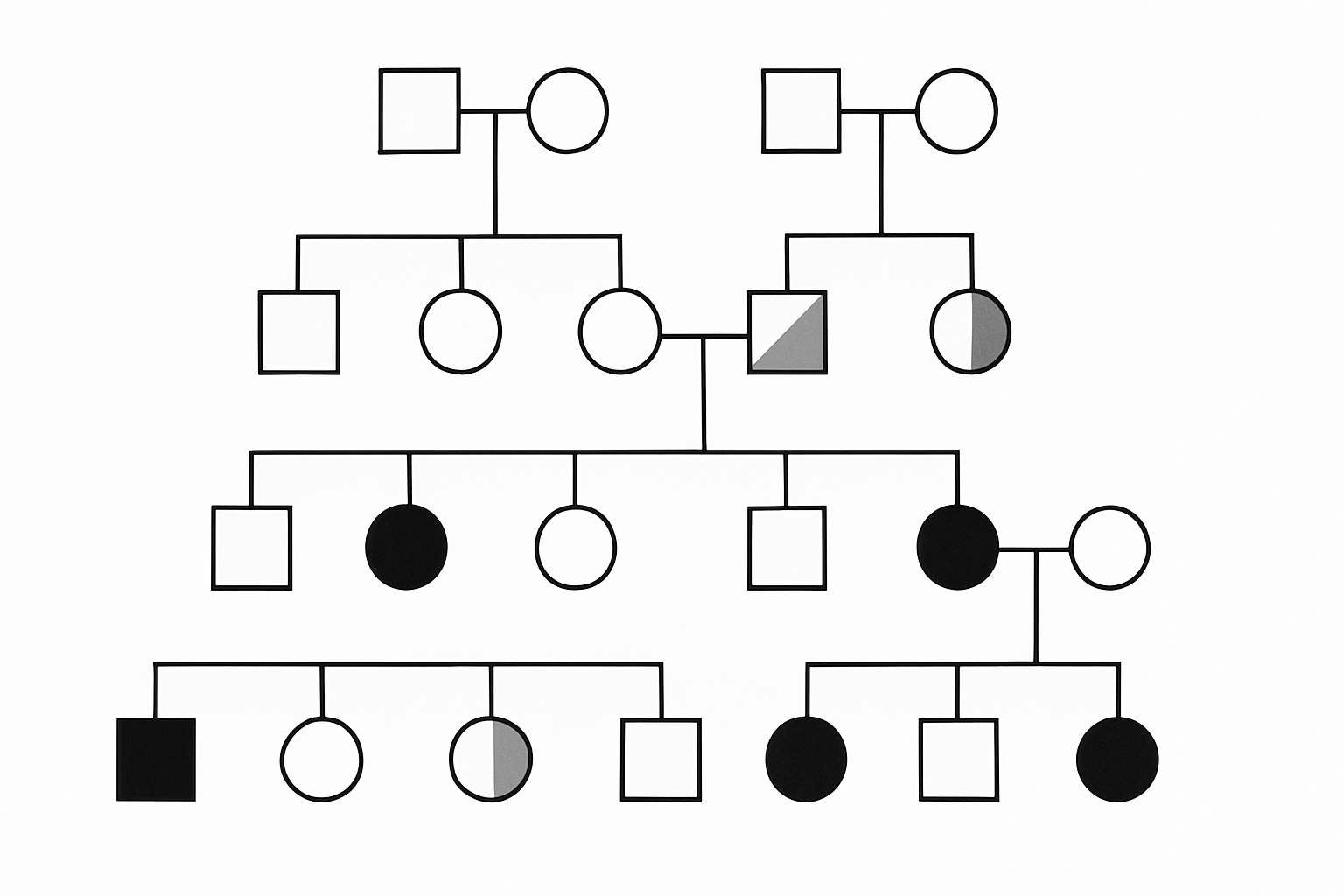
A pedigree chart is a graphical representation of a family tree that illustrates the occurrence and appearance of phenotypes of a particular gene or organism and its ancestors. It is an essential tool used in genetics, medicine, and anthropology to track the inheritance patterns of traits, diseases, and genetic conditions through generations. Understanding the key points of pedigree charts enables professionals and students alike to interpret genetic information correctly and make informed decisions.
Purpose and Importance of Pedigree Charts
Pedigree charts serve multiple important functions in both research and clinical settings:
- Tracking Genetic Disorders: They help identify inherited conditions like cystic fibrosis, hemophilia, or sickle cell anemia by illustrating who in the family carries or expresses a certain trait.
- Predicting Risk: Health professionals use pedigrees to estimate the likelihood of inheriting or passing on genetic diseases, assisting in genetic counseling.
- Understanding Inheritance Patterns: Pedigrees reveal whether a trait follows autosomal dominant, autosomal recessive, X-linked dominant, X-linked recessive, or mitochondrial inheritance.
- Research Tool: They assist researchers in mapping genes responsible for diseases and traits within certain populations.
Fundamental Symbols and Their Interpretation
Interpreting a pedigree chart requires familiarity with standardized symbols. The most commonly used symbols include:
- Squares: Represent male individuals.
- Circles: Represent female individuals.
- Filled Symbols: Indicate individuals expressing the trait or affected by the condition.
- Half-Filled Symbols: Often used to indicate carriers who do not express the trait but can pass it on.
- Horizontal Line: Connects two individuals who have mated or married.
- Vertical Line: Connects parents to their offspring.
- Dots or Question Marks: May represent unknown information or uncertain status.
Understanding and using these symbols consistently ensures clear communication and accurate interpretation.
Common Inheritance Patterns in Pedigree Charts
Analyzing a pedigree chart involves recognizing how a trait is inherited across generations. The primary inheritance patterns include:
- Autosomal Dominant: Trait appears in every generation; affected individuals have at least one affected parent.
- Autosomal Recessive: Trait may skip generations; affected individuals can have unaffected carrier parents.
- X-Linked Recessive: More commonly affect males; females are usually carriers.
- X-Linked Dominant: Affects both males and females, but often more severe in males.
- Mitochondrial Inheritance: Passed exclusively from mother to offspring through mitochondrial DNA.
Identifying the pattern is crucial when predicting risks and providing genetic counseling.
Constructing a Pedigree Chart: Step-by-Step Process
Creating an accurate pedigree chart requires careful data collection and clear documentation:
- Collect Family History: Interview family members to gather information about relationships, ages, health status, and known traits or diseases.
- Define the Trait of Interest: Specify the genetic trait or condition you are tracking.
- Use Standard Symbols: Draw the pedigree chart using standardized symbols to represent individuals and traits.
- Record Generations: Label generations with Roman numerals and individuals within generations with Arabic numerals.
- Note Relevant Details: Add information such as age at onset, deceased status, or carrier status if known.
This systematic approach ensures clarity and usefulness of the pedigree for analysis.
Common Mistakes and How to Avoid Them
Errors in pedigree charts can lead to incorrect conclusions. Watch out for the following common mistakes:
- Incomplete Information: Missing data about family members can obscure inheritance patterns; always verify and update data.
- Incorrect Symbol Usage: Consistent use of symbols is critical; avoid mixing conventions.
- Assuming Non-Reported Traits as Absent: Some family members may have undisclosed or unknown conditions; be cautious when interpreting presence or absence.
- Ignoring Phenocopies: Environmental factors can cause symptoms similar to genetic traits; consider differential diagnoses.
Double-checking and consulting with family members or medical records can mitigate these issues.
Applications and Practical Examples
Pedigree charts have practical applications in various fields:
- Medical Genetics: A doctor identifies a family with a history of Huntingtons disease and uses a pedigree chart to analyze who might be at risk and to guide testing.
- Animal Breeding: Breeders use pedigrees to track desirable traits and avoid inbreeding.
- Anthropology and History: Researchers trace ancestry and migration patterns through generations.
Example: Consider a pedigree showing multiple generations with individuals affected by hemophilia. By analyzing the pattern (mostly males affected, females carriers), a geneticist can deduce that hemophilia follows an X-linked recessive inheritance pattern.
Tips for Effective Pedigree Chart Analysis
To optimize the utility of a pedigree chart, consider the following tips:
- Cross-Verification of Information: Validate data collected from different family members to ensure accuracy and completeness, especially for older generations where records may be scarce.
- Incorporate Medical Records: Whenever possible, supplement the pedigree with clinical data, genetic test results, and medical histories to enhance clarity.
- Use Software Tools: Several pedigree drawing software programs can help standardize chart presentation and facilitate analysis.
- Note Environmental Influences: Document any environmental factors that might mimic genetic traits to avoid misinterpretation.
- Regular Updates: Family structures and health statuses change over time; keep the pedigree updated to maintain its relevance.
Emerging Trends and Technologies in Pedigree Analysis
Advancements in genetic testing and bioinformatics are transforming how pedigree charts are used and analyzed:
- Integration with Genomic Data: Modern pedigrees are increasingly combined with whole-genome sequencing data, allowing for more precise identification of genetic variants and inheritance patterns.
- Digital Pedigrees: Online and electronic pedigree databases facilitate the collection, storage, and sharing of family genetic information among clinicians and researchers.
- Predictive Analytics: Machine learning models applied to pedigree and genetic data can improve prediction of disease risk and guide personalized medicine.
- 3D Visualizations: Emerging tools enable dynamic and interactive pedigree representations that enhance comprehension and education.
Staying abreast of these technological advances can empower healthcare providers and researchers to utilize pedigree charts more effectively.
Conclusion
Pedigree charts are invaluable tools for understanding genetic inheritance and family history. Mastering their key points—including symbols, inheritance patterns, construction methodology, and common pitfalls—empowers healthcare professionals, researchers, and students to make accurate interpretations. Accurate pedigree analysis facilitates informed genetic counseling, aids in disease risk prediction, and supports scientific research. As technology evolves, so too does the potential for pedigree charts to become even more integral to precision medicine and genetic sciences. Furthermore, expanding education on pedigree interpretation and fostering interdisciplinary collaboration will continue to enhance the utility and impact of pedigree charts within the medical and scientific communities.
